GAME DESIGN
ILLUSTRATOR
SOLO PROJECT
MAY 2025
OVERVIEW
Chaos ensues when players have creative control
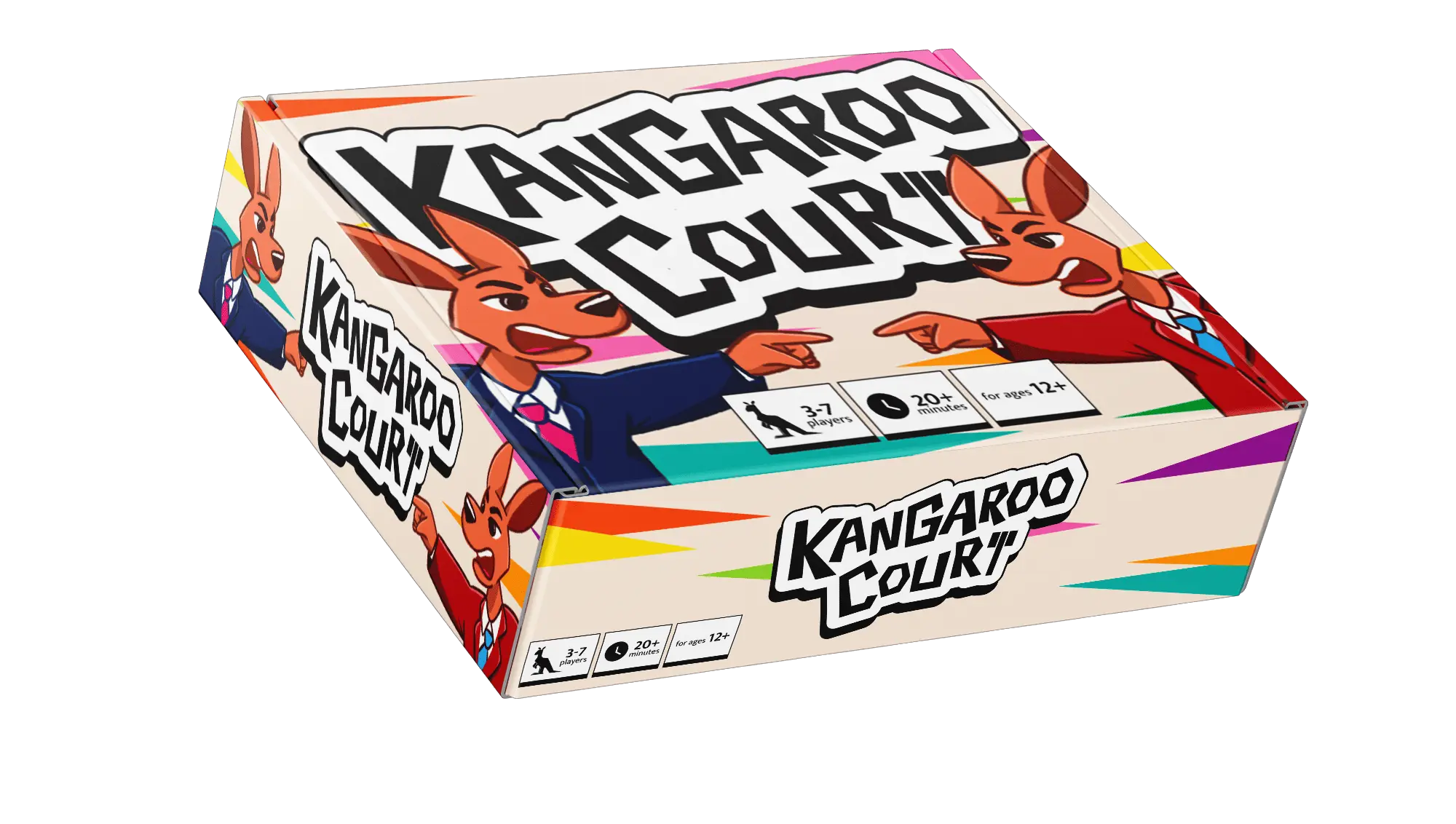
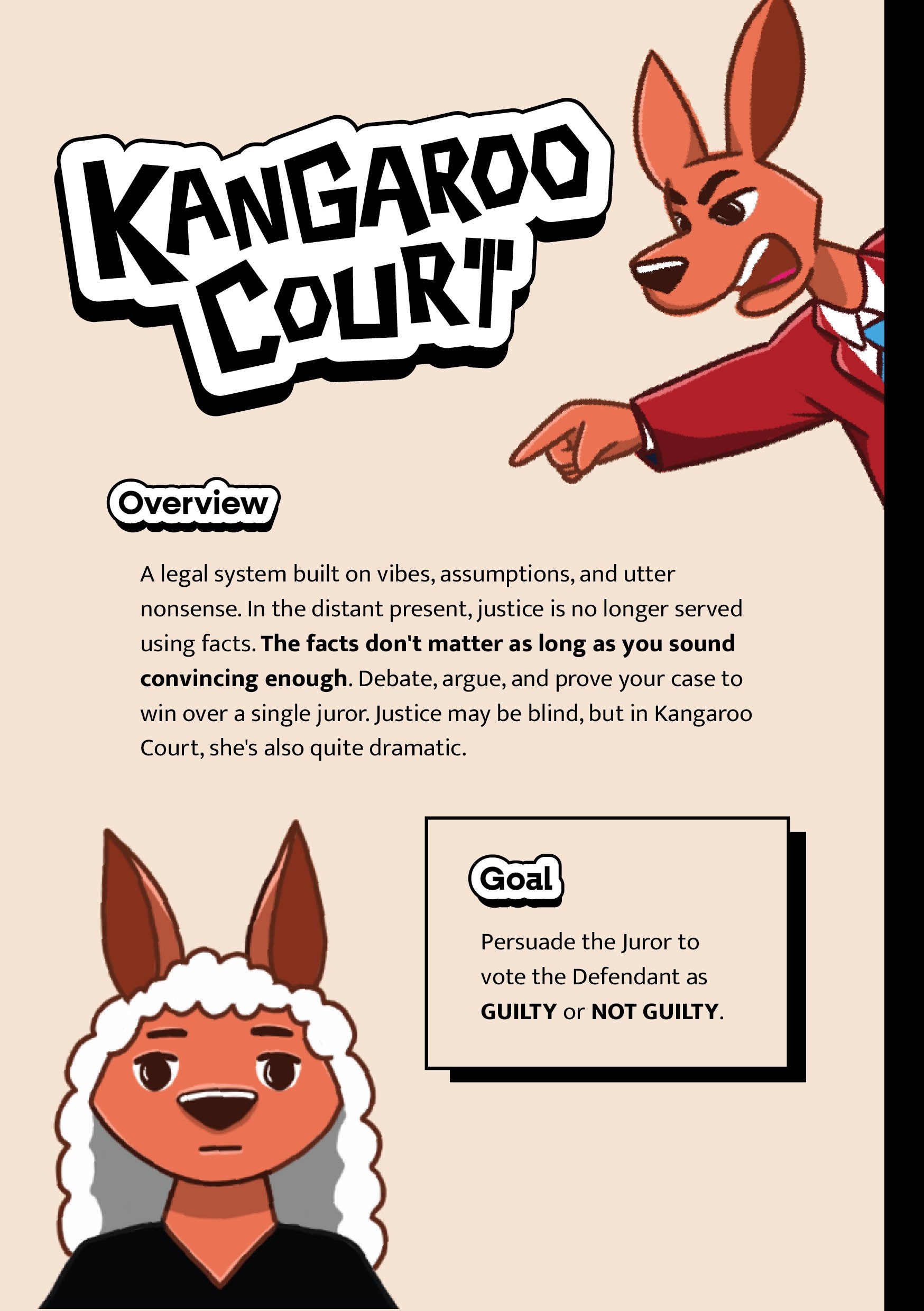
Kangaroo Court is chaotic party-debate courtroom roleplaying game where players must argue their case using absurd evidence and even more absurd reasoning.
The game began as a rapid prototype for the UC Davis Game Dev & Arts Club's 2025 Spring Game Jam. Originally built around a themed prompt, the project quickly evolved into a focused party game centered on player storytelling and group dynamics. After the jam, I continued development independently.
OBJECTIVES
Prioritize improvisation and player storytelling as the core game mechanic.
Simplify rules for quick player onboarding.
Emphasize player interactions and humor over complex systems.
Create a structured foundation that provides direction and creative flexibility.
INITIAL CONCEPT
Conceptualizing what "Unison" could look like in a tabletop game
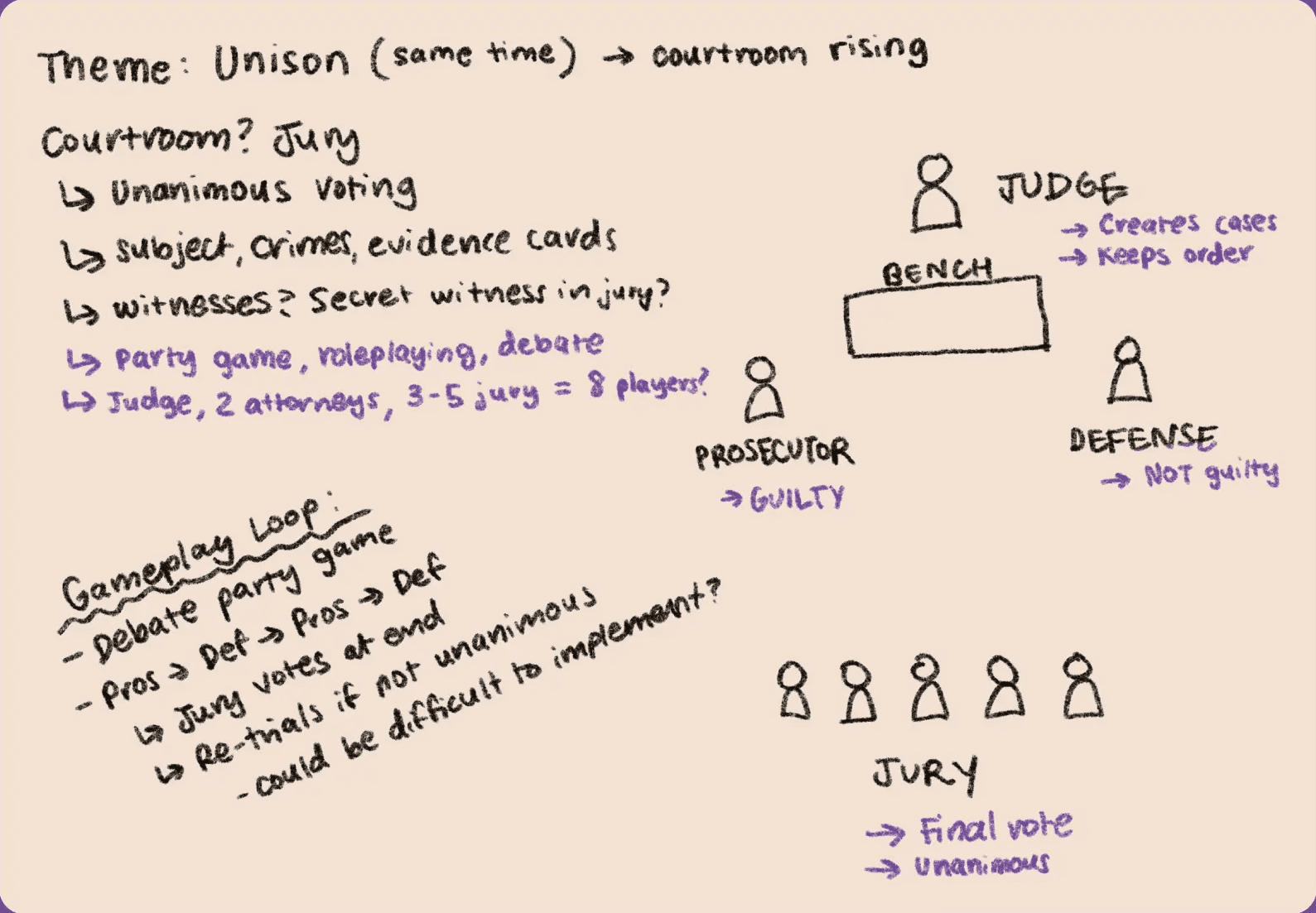
When the game jam theme was announced to be "Unison," only one image came to mind: a courtroom rising together. But how could a courtroom become a board game?
I started by laying out a foundational gameplay loop. A court proceeding's structure naturally lent itself to multiple gameplay phases. The inherent debate aspect between attorneys led to ideas of a party-debate roleplaying game. What if players each took a position and preached their side of the case? With the clock quickly ticking away from the jam deadline, I jumped into ideation and experimented with paper prototypes.

KEY DESIGN CHALLENGES
Identifying the goals and potential pain points before playtesting
Going into the project, I identified several design challenges that guided the playtesting phases. Keeping these goals in mind allowed the game to remain balanced, engaging, and accessible to all players.
KEY DESIGN CHALLENGES
How can I make a complex courtroom be intuitive for all players?
How might I encourage roleplay without requiring acting skills?
How can I balance strategy and debate with absurd humor?
How can I keep all player roles engaged throughout the trial?
How might I create replayability without increasing complexity?


RAPID PROTOTYPING
Gaining essential early feedback through rapid paper prototyping
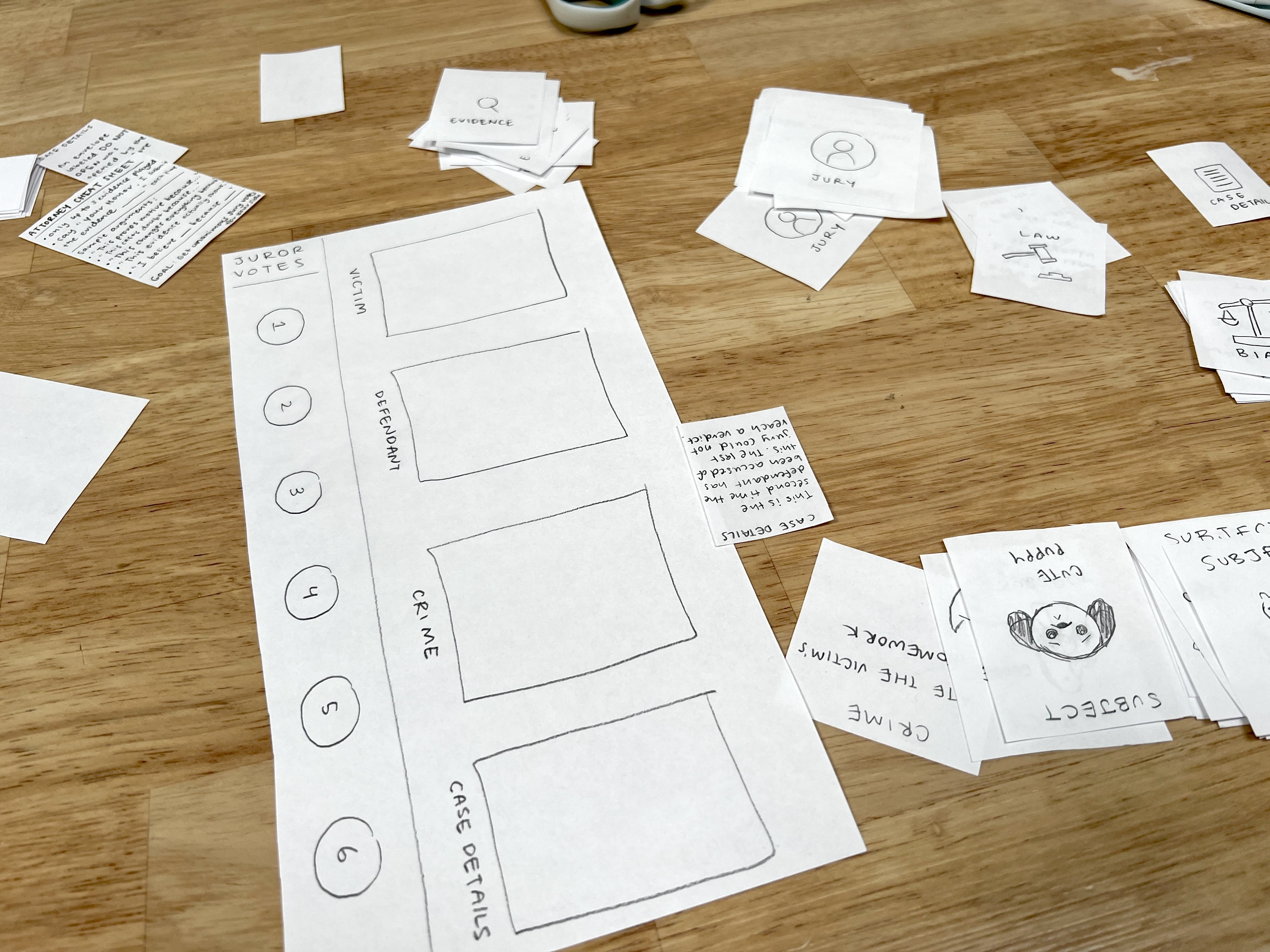
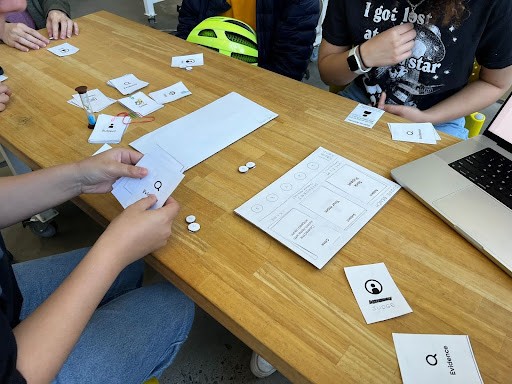
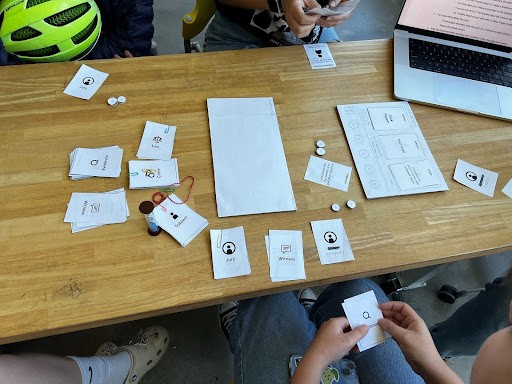
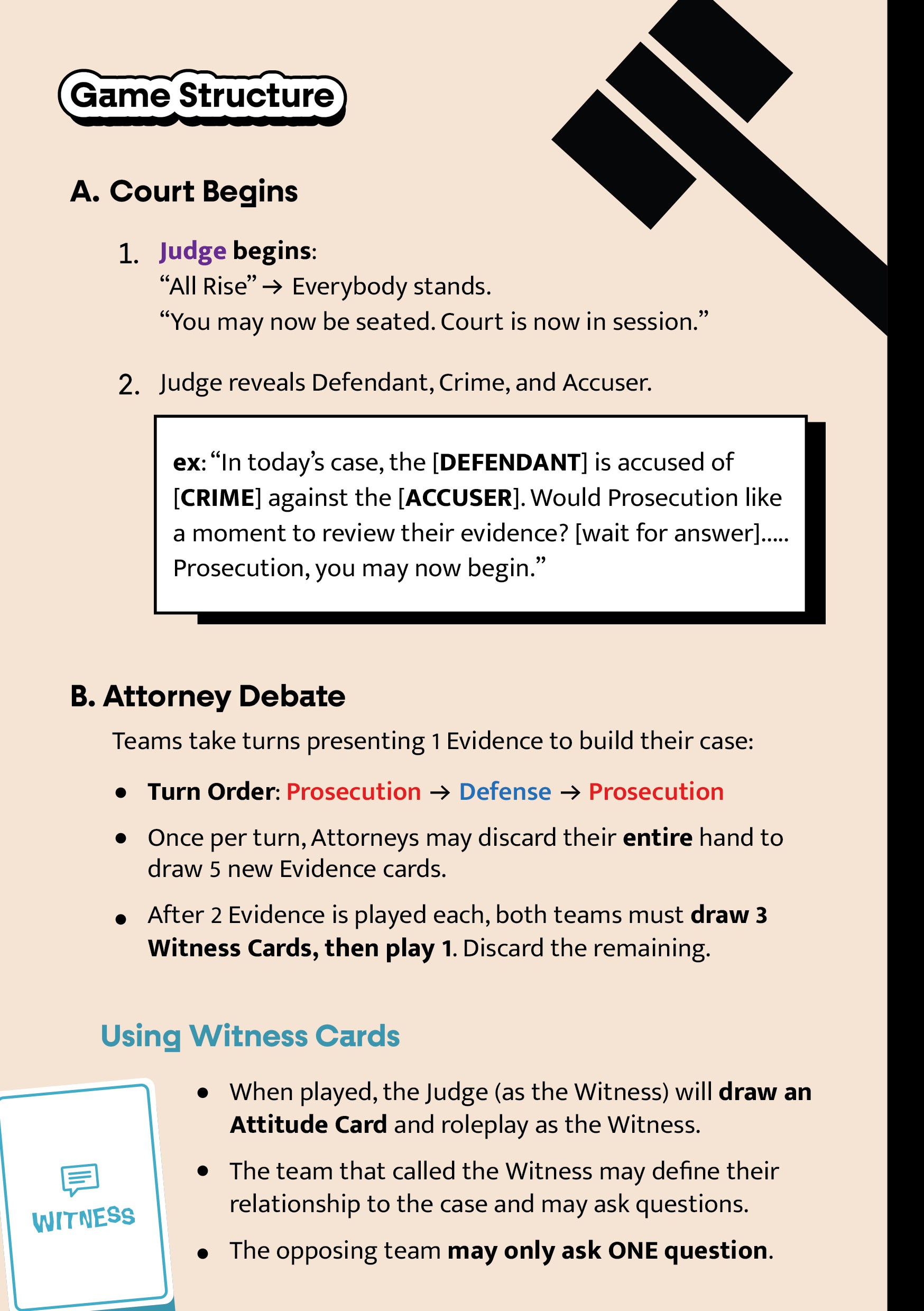
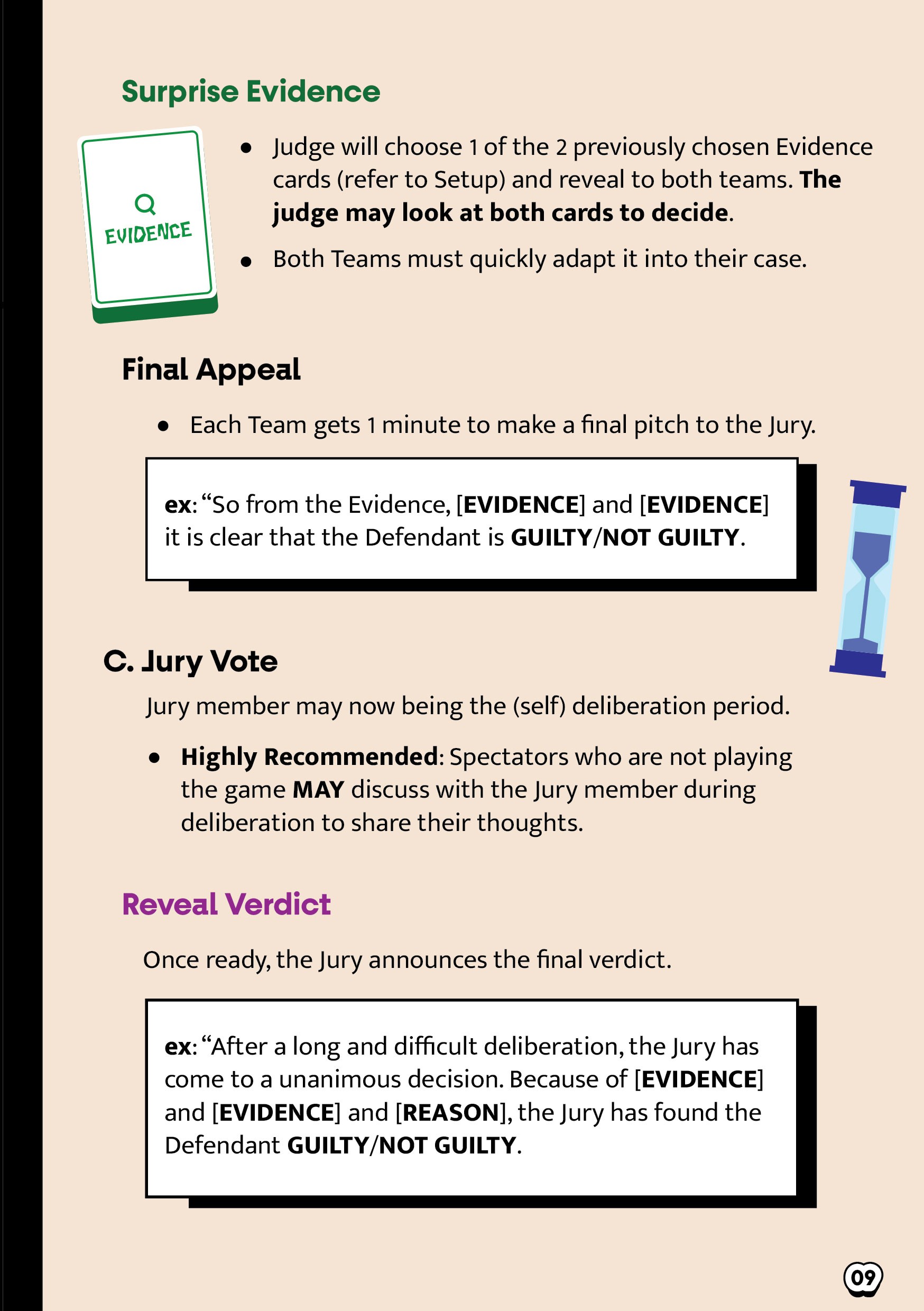
Due to the limited game jam deadline, I quickly began rapid paper prototyping pieces including player roles, case subjects, evidence, the main judge board, and a jury voting system. Kangaroo Court's foundation stemmed from a basic gameplay loop: the Judge chooses the case, Attorneys debate, and the Jury must unanimously vote at the end or head into a re-trial turn.
Despite uncertainty with the game idea, there was already positive playtesting reception, especially amongst friend groups. Players found the game very entertaining, but some found it difficult to stay engaged and follow the cases until the end.
PROTOTYPE FEEDBACK:
Very entertaining and fun to play.
Abstract cases → hard to make arguments.
Judge/Jury feel too passive, difficult to stay engaged.
Attorneys got confused on their debates.
Heavily reliant on their performance to carry the game.
ITERATION TWO
Experimenting new features without restrictions
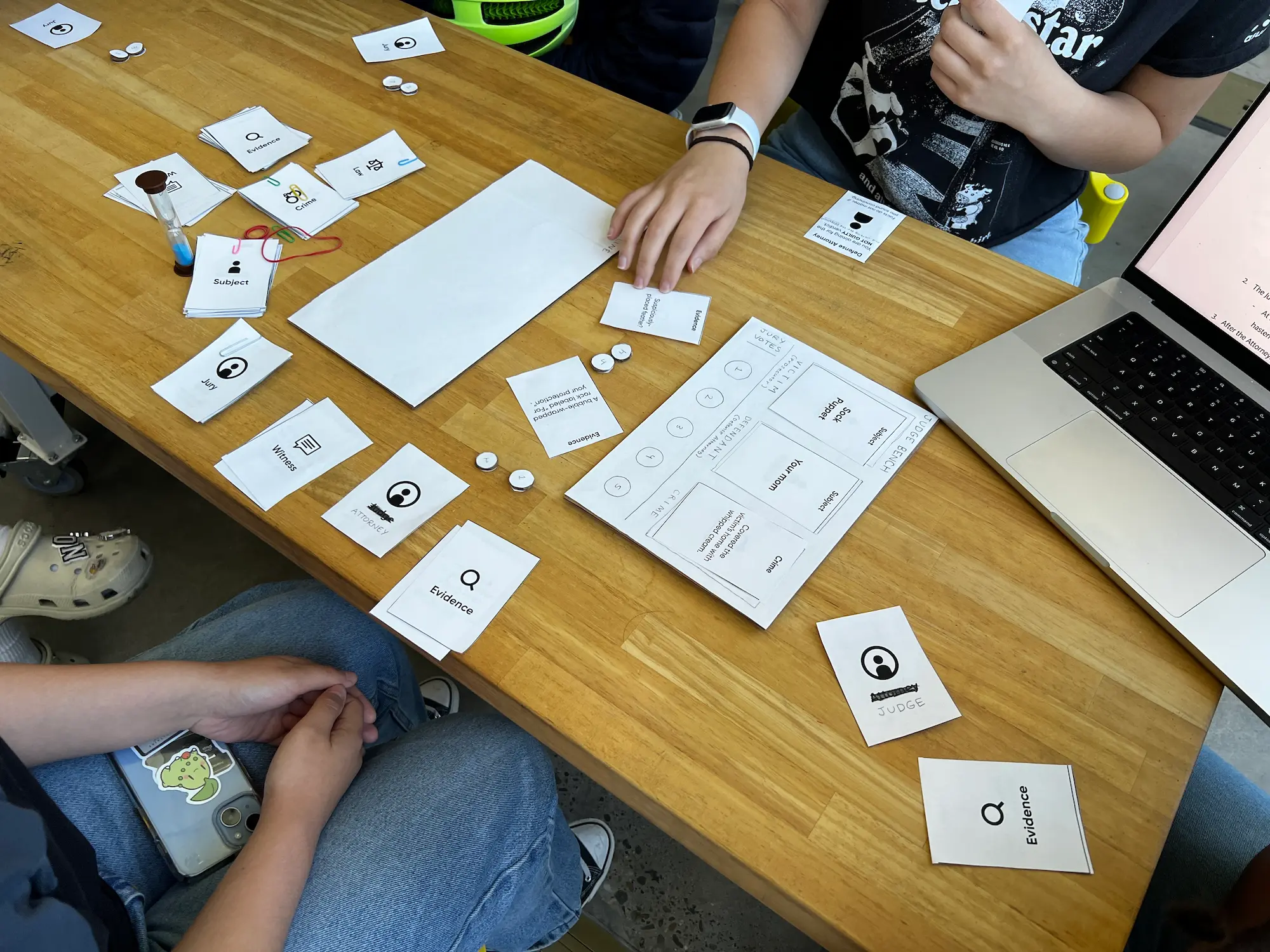
Post-game jam, I expanded the game with no time or theme restrictions. Unanimous voting was removed and new features like a Timeline board to present evidence in chronological order, Jury Personas and Professions for roleplaying, and Witness statements as evidence were experimented with. However, the Timeline and Jury Personas were removed after negative feedback.
ITERATION TWO FEEDBACK:
Judge/Jury still felt very passive and distracted.
Jury felt like observers and not active players.
Attorneys forget about the Crime and go on tangents.
Good prompting so far, heavily reliant on player performance. Should utilize real debate structures.
ITERATION THREE
Systematic issues required a major gameplay overhaul
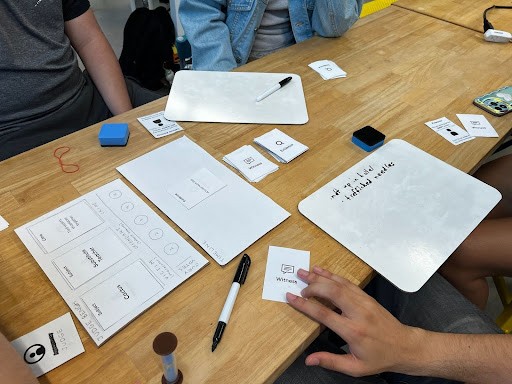
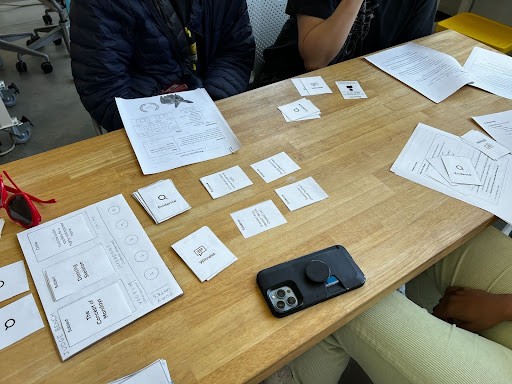
After multiple rounds of feedback cycles, similar playtesting feedback reoccured. The Judge and Jury roles felt too passive, the Attorneys felt too pressured to maintain the game, and all players lost track of the arguments. Iteration three needed a huge overhaul.
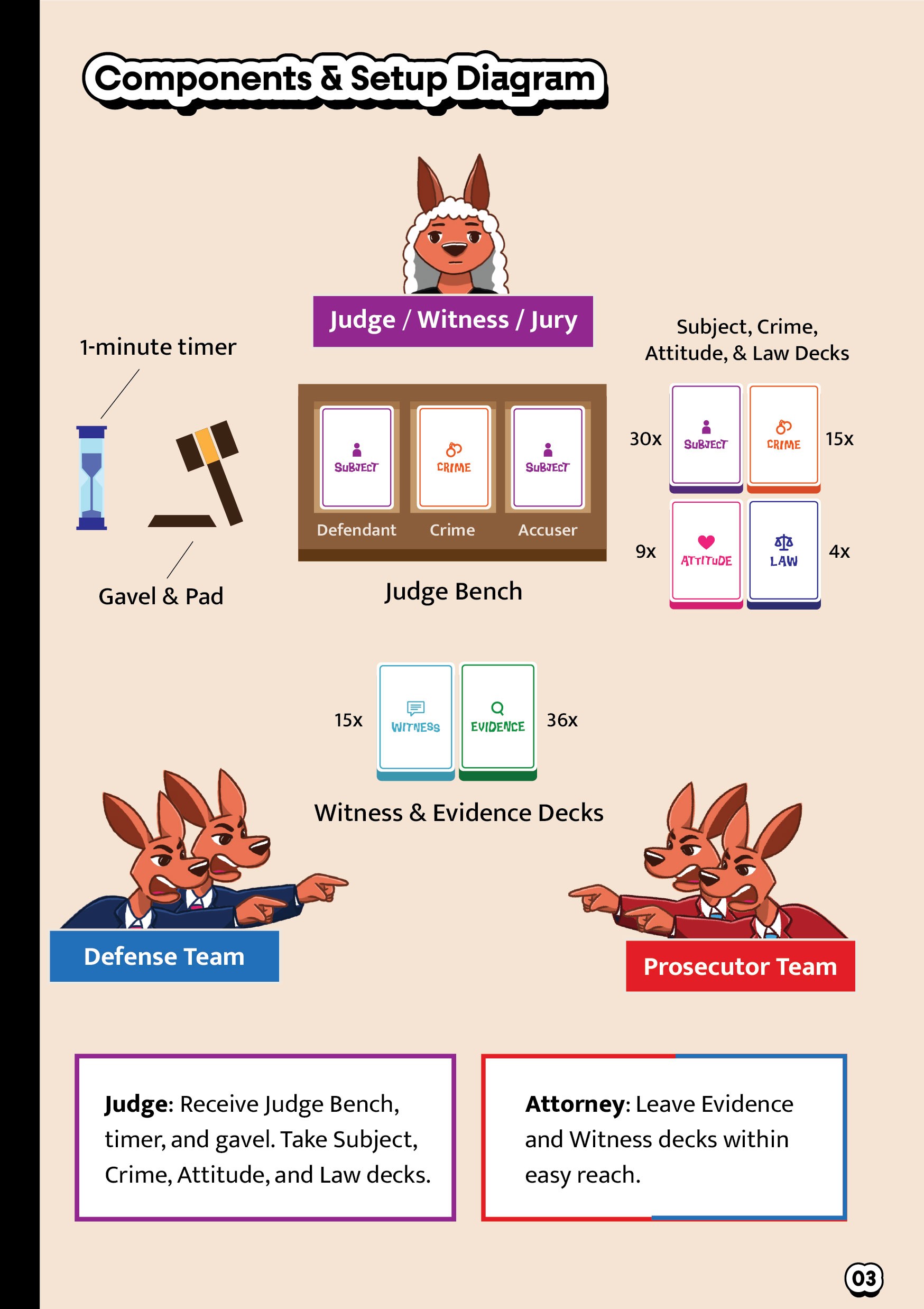
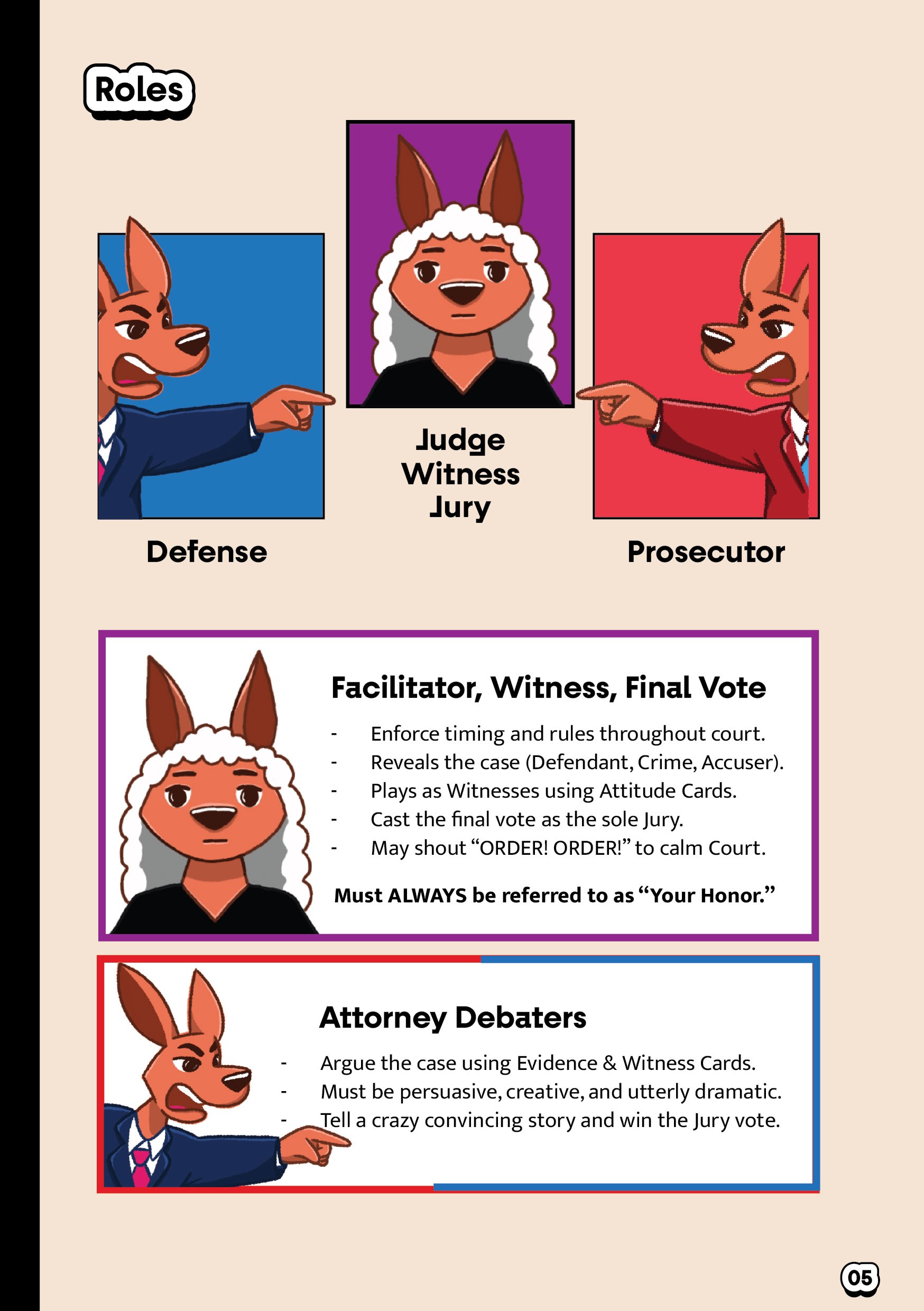
I introduced a fresh role called the Witness that read Witness statements and roleplays a questioning section. To combat passiveness, I combined the Judge, Jury, and Witness into one role. This way, the player would stay active throughout the entire game. Attorneys were no longer 1v1, instead expanding to Attorney Teams with 1-3 players. This relived pressure on individual performance and allowed for discussion on case details.


ITERATION THREE FEEDBACK:
Role changes helped passive feeling very well.
Judge/Jury/Witness player felt engaged throughout.
Attorney Teams liked working together. Allowed quieter players to still contribute.
Wished they could draw more Evidence cards.
FINAL ITERATION
Polishing the game into a final product
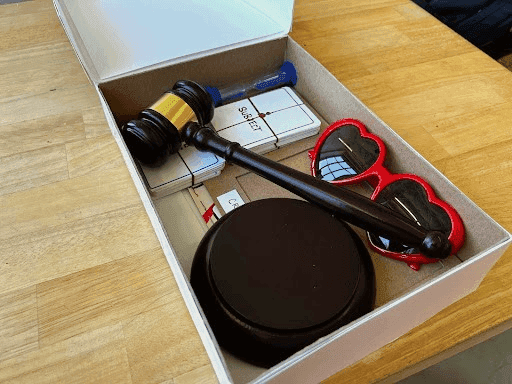
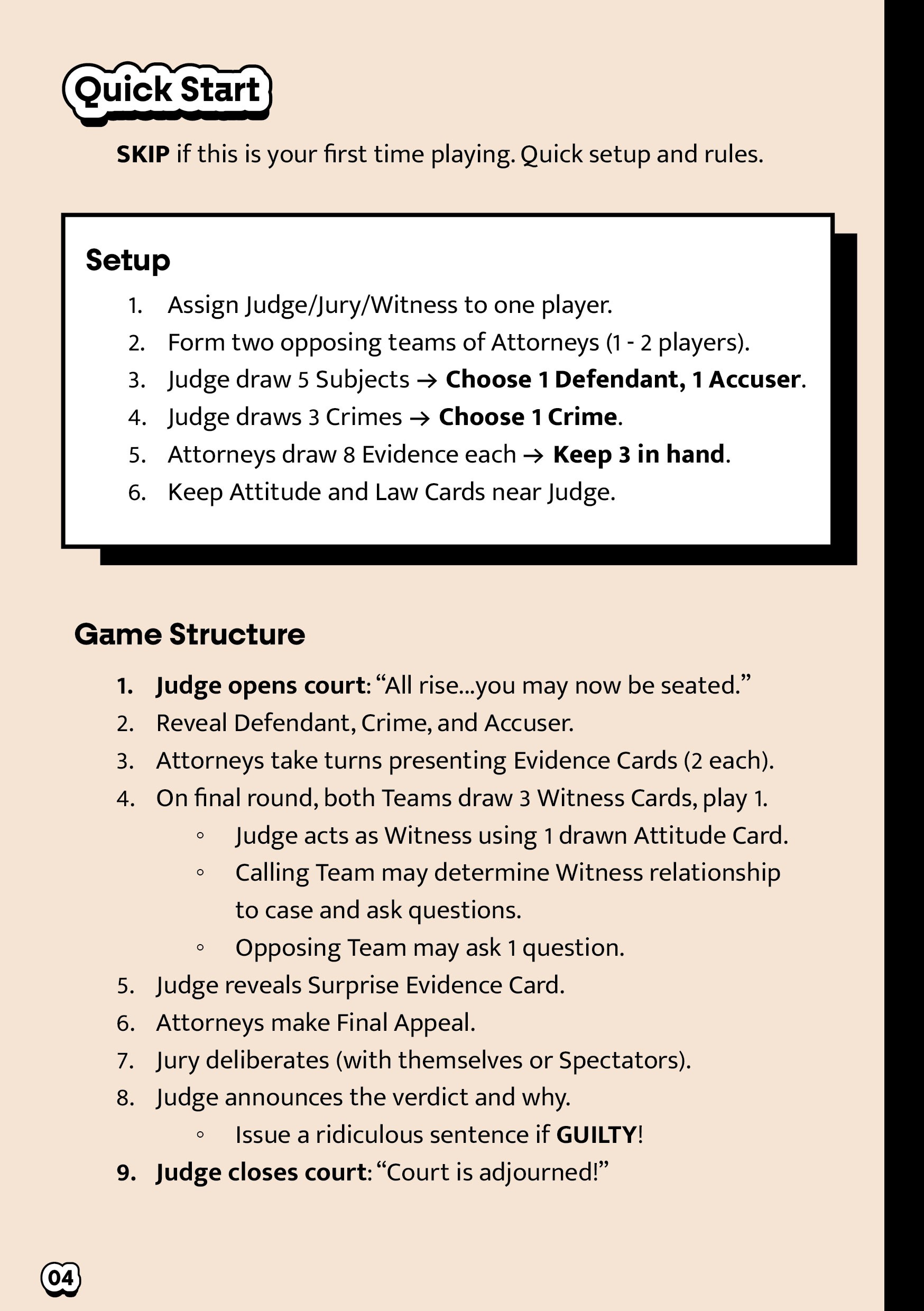
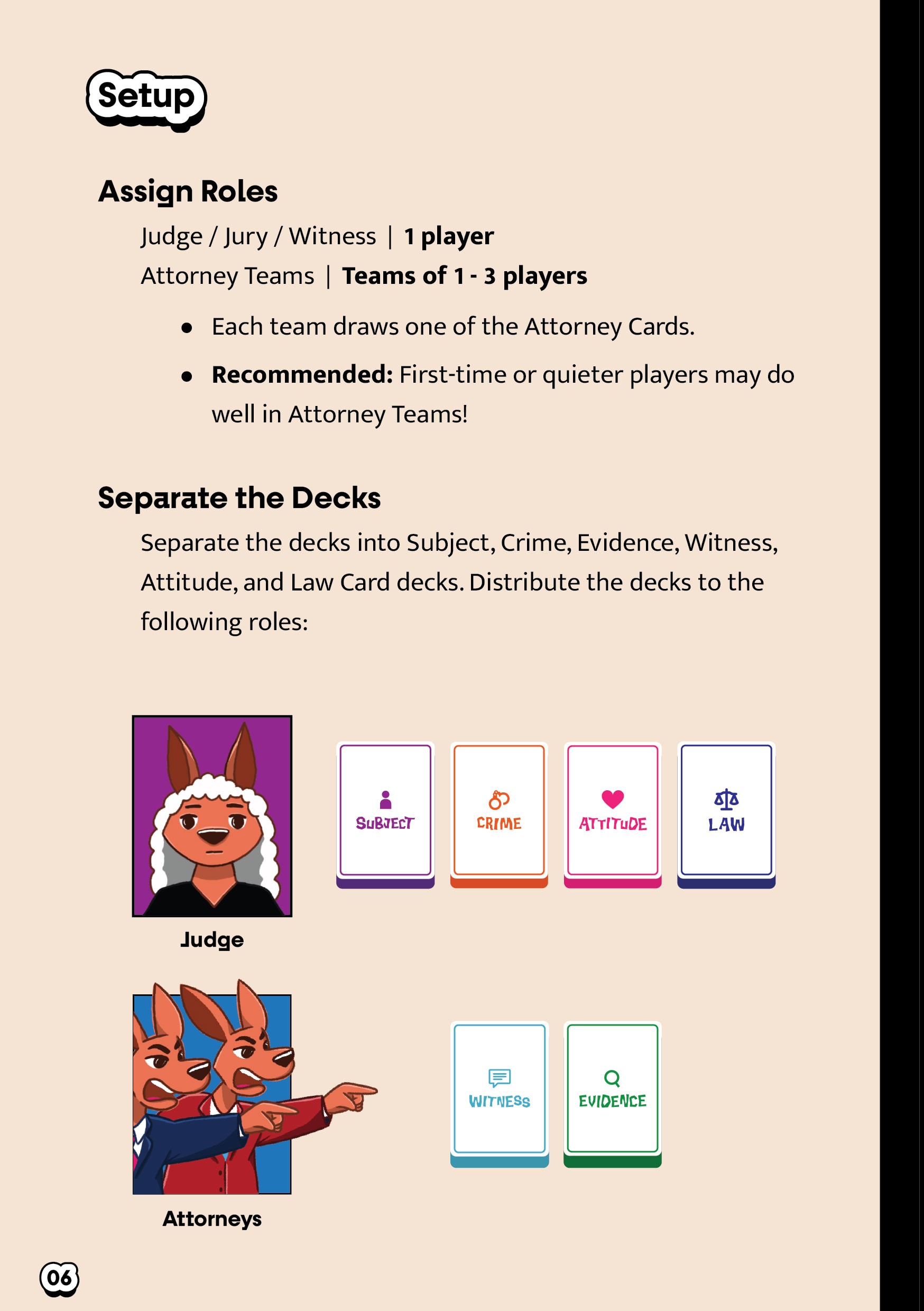
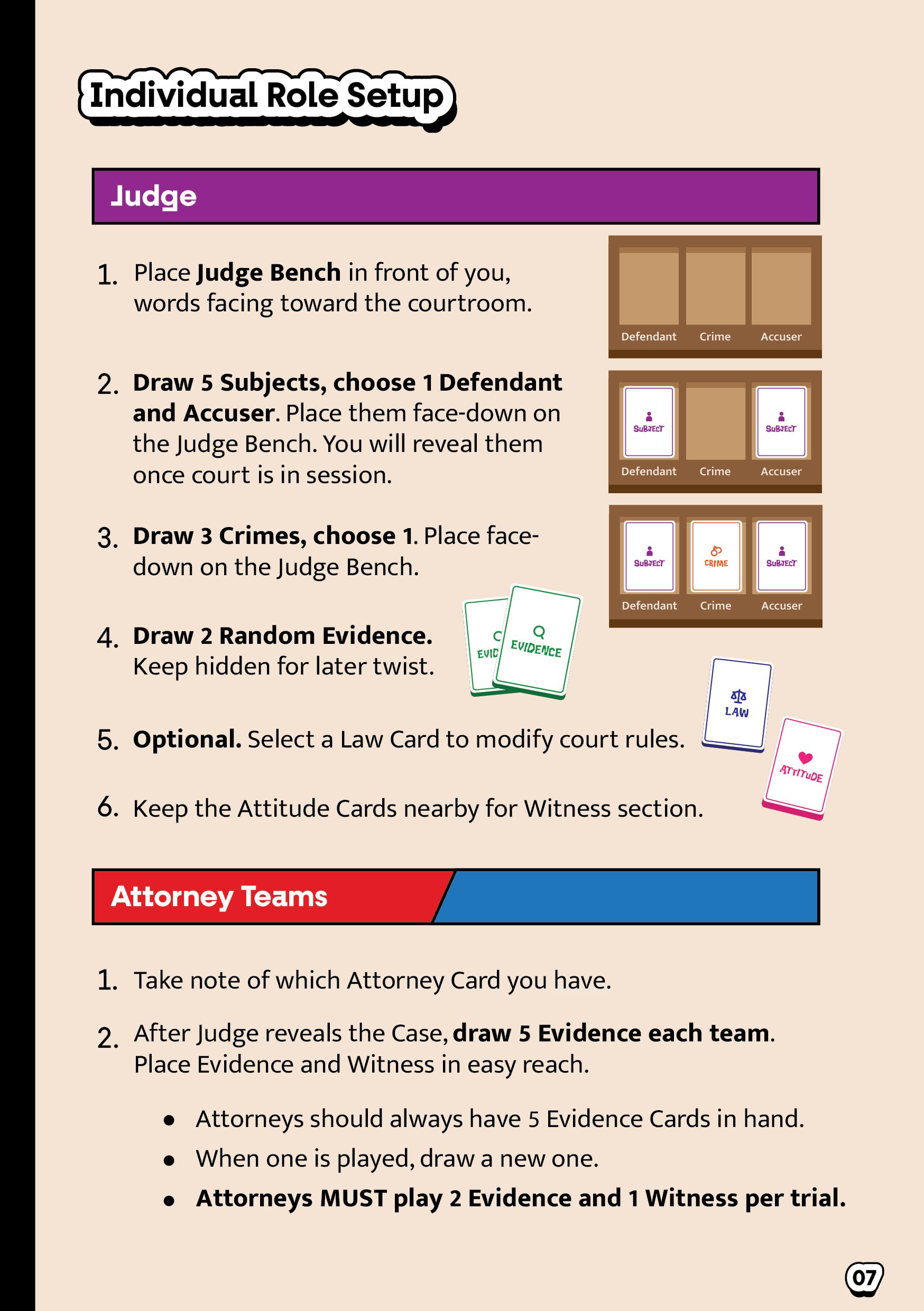
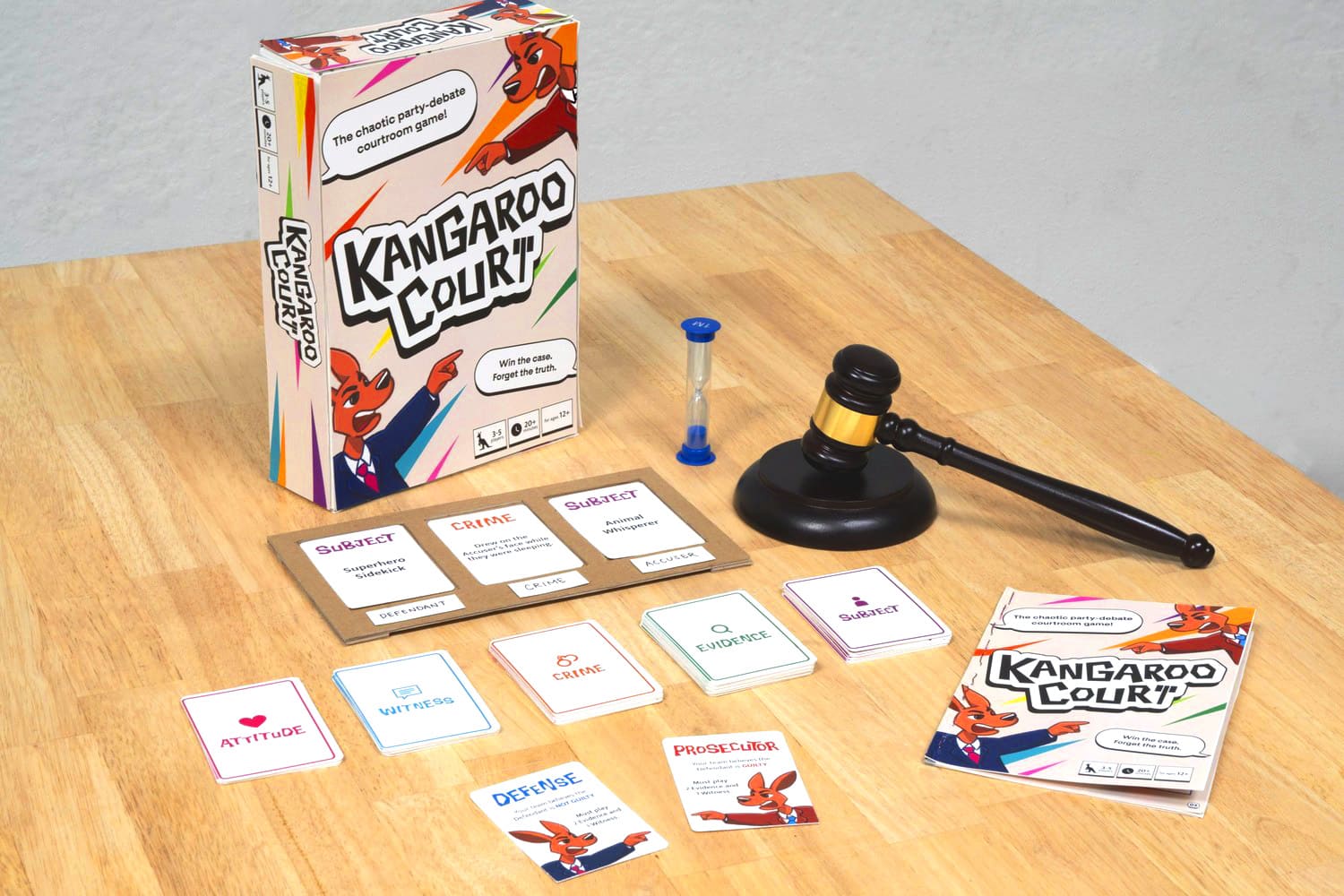
With much of the gameplay polished, the final iteration focused on material production. I developed the overall visual system for the packaging, rulebooks, and cards. To stray from a serious courtroom atmosphere, the branding is intended to feel colorful and chaotic. Additionally, physical props, such as the gavel and pad and Witness "costumes" added to the overall roleplaying aspect and allowed players to physically engage in the gameplay.

FINAL ITERATION FEEDBACK:
Roles felt more engaging and intuitive to everyone.
Really liked the "costume" changes and gavel.
Thought the box and rulebook looked very nice.
Some inconsistencies in the rulebook.
Game ended much faster, only about 25mins.
FINAL GAME
The chaotic party-debate game born from weeks of iterations
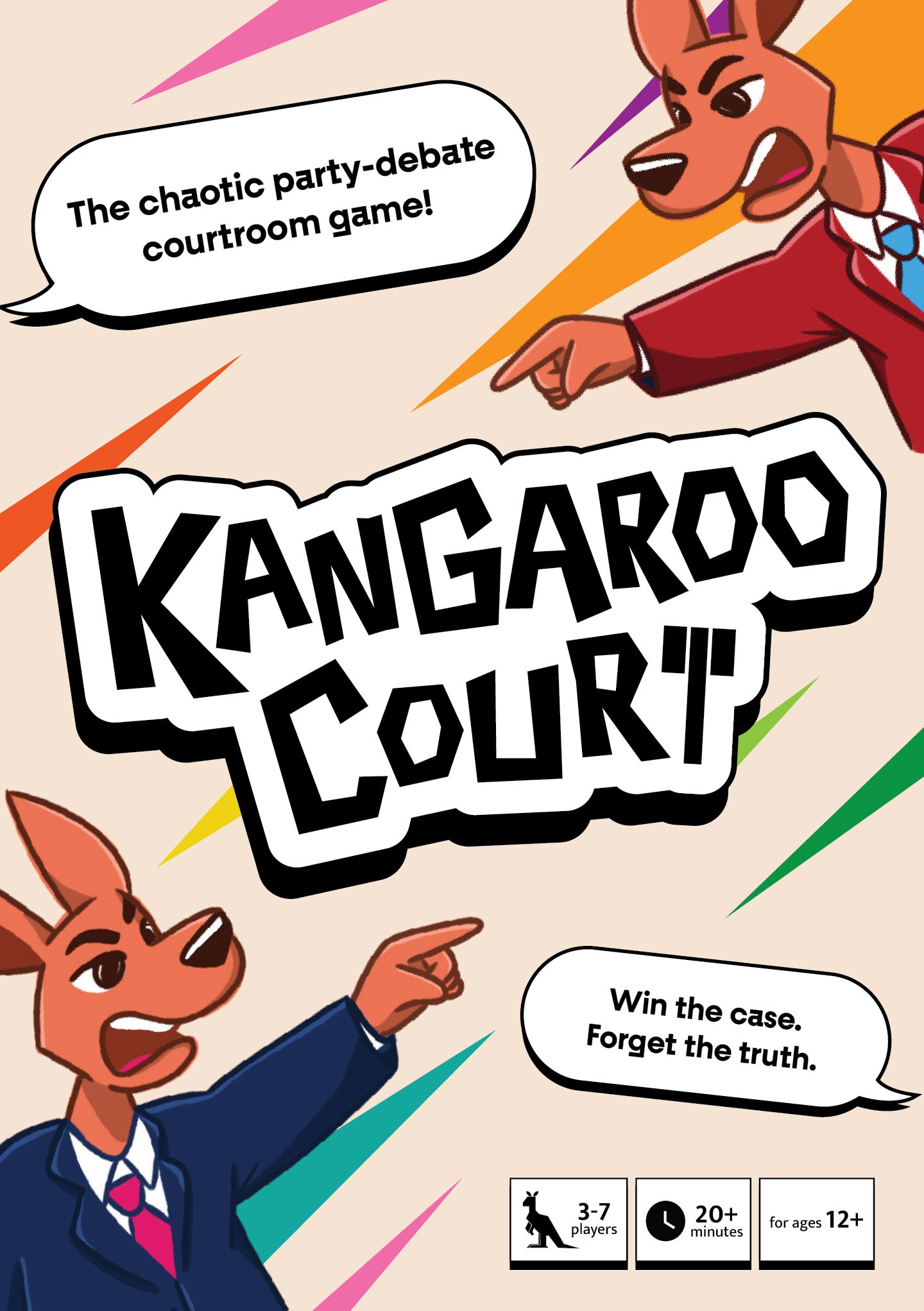
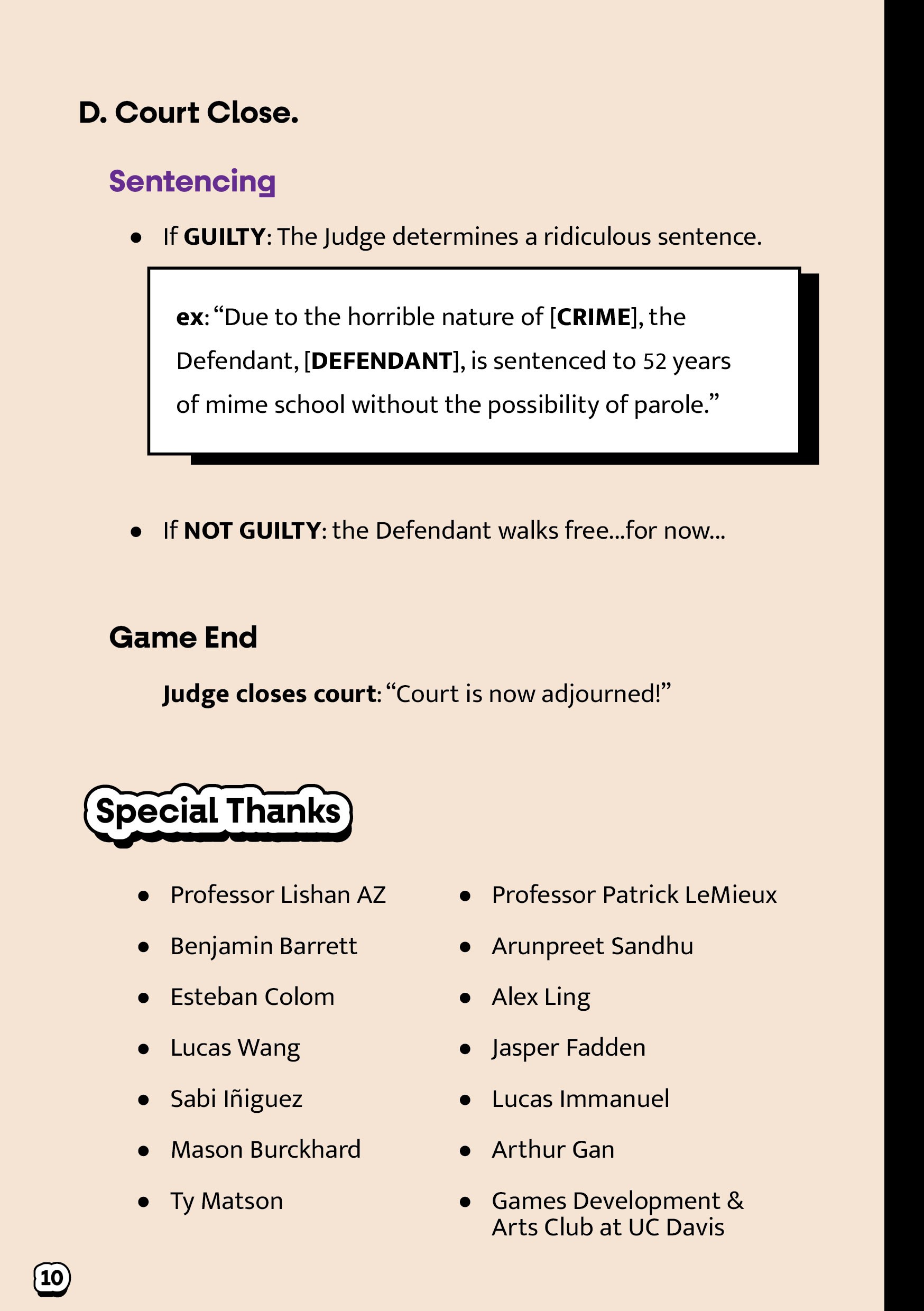
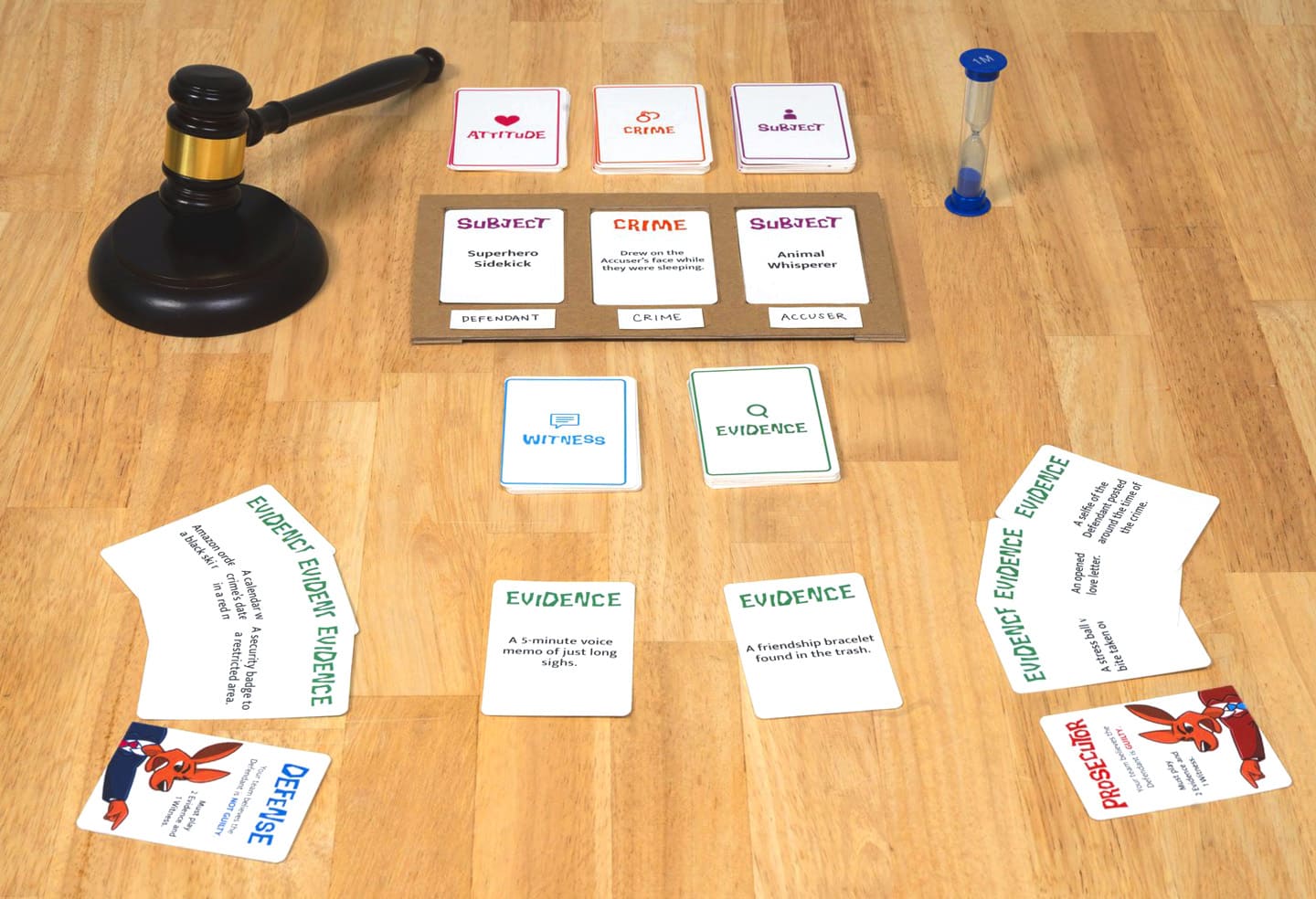
Kangaroo Court is a chaotic and satirical party-debate courtroom game for 3-7 players. Face head-to-head as Attorneys who debate absurd cases using questionably-sourced evidence, or determine the flow and verdict as the Judge/Jury. Through multiple rounds of playtesting, the game evolved into a structured yet highly improvisational experience that encourages roleplaying, creativity, and player interaction.
A free printable paper version can be found on my itch.io page.



FUTURE STEPS
Kangaroo Court is still an ongoing project and will likely continue development. Some future goals include expanding card options, completing the visual system, and potential material production and game publication.
Kangaroo Court is still an ongoing project and will likely continue development. Some future goals include expanding card options, refining the visual system with the cards and rulebook, and potential material production and game publication.
Design complete cohesive visual system
Finish designing the cards and branding assets. Ensure the entire visual system is consistent across the board.